Here's the thing about self-consciousness during solo play
You're not broken. You're not weird. You're actually dealing with something I see constantly in my practice: the internalized belief that your pleasure matters less than someone else's comfort with your pleasure. And that belief is a pleasure killer.
Self-consciousness during masturbation does specific damage. It pulls your attention out of your body and into a phantom audience. You're not thinking about what feels good. You're thinking about whether it's okay that you're thinking about what feels good. That loop shuts down arousal faster than anything I know.
Why shame shows up here
We tell girls early that their bodies are for looking at, not for using. Solo pleasure gets the least cultural permission of any sexual activity. A partner sex is seen as normal, healthy, bonding. Masturbation is still treated like something you do because you have to, not because you deserve to. That messaging lives in your nervous system.
Adding a tool like a lemon vibrator into the mix sometimes feels like it escalates the taboo. If it's "just masturbation" it's bad enough. But masturbation plus a vibrator, plus something as explicitly designed for pleasure as a clitoral sucker. That can feel like admitting something you're not supposed to admit.
Except here's what's actually true: using a tool for your own pleasure is an act of self-respect. It's choosing yourself. And that choice is worth protecting.
How self-consciousness sabotages arousal
Arousal requires mental capacity. It needs your prefrontal cortex to relax enough that your limbic system can run the show. Self-consciousness keeps your prefrontal cortex hyperactive. You're monitoring, judging, performing for an imagined witness. That's the opposite of relaxation.
When you're using a lemon vibrator or any clitoral toy, you need to be present with sensation. The device does half the work. Your mind does the other half. If your mind is somewhere else, spinning on shame, the physical sensation becomes just sensation. Not arousal. Not pleasure. Just stimulus.
People often describe this as feeling numb during solo play. But it's not actual numbness. It's attention hijacking. Your clitoris is responding. Your nervous system is registering the stimulation. But you're not there to feel it because you're too busy feeling bad about the whole thing.
The practical shift: permission is equipment
Here's where lemon vibrators and other well-designed clitoral toys become genuinely useful. The design itself gives you permission.
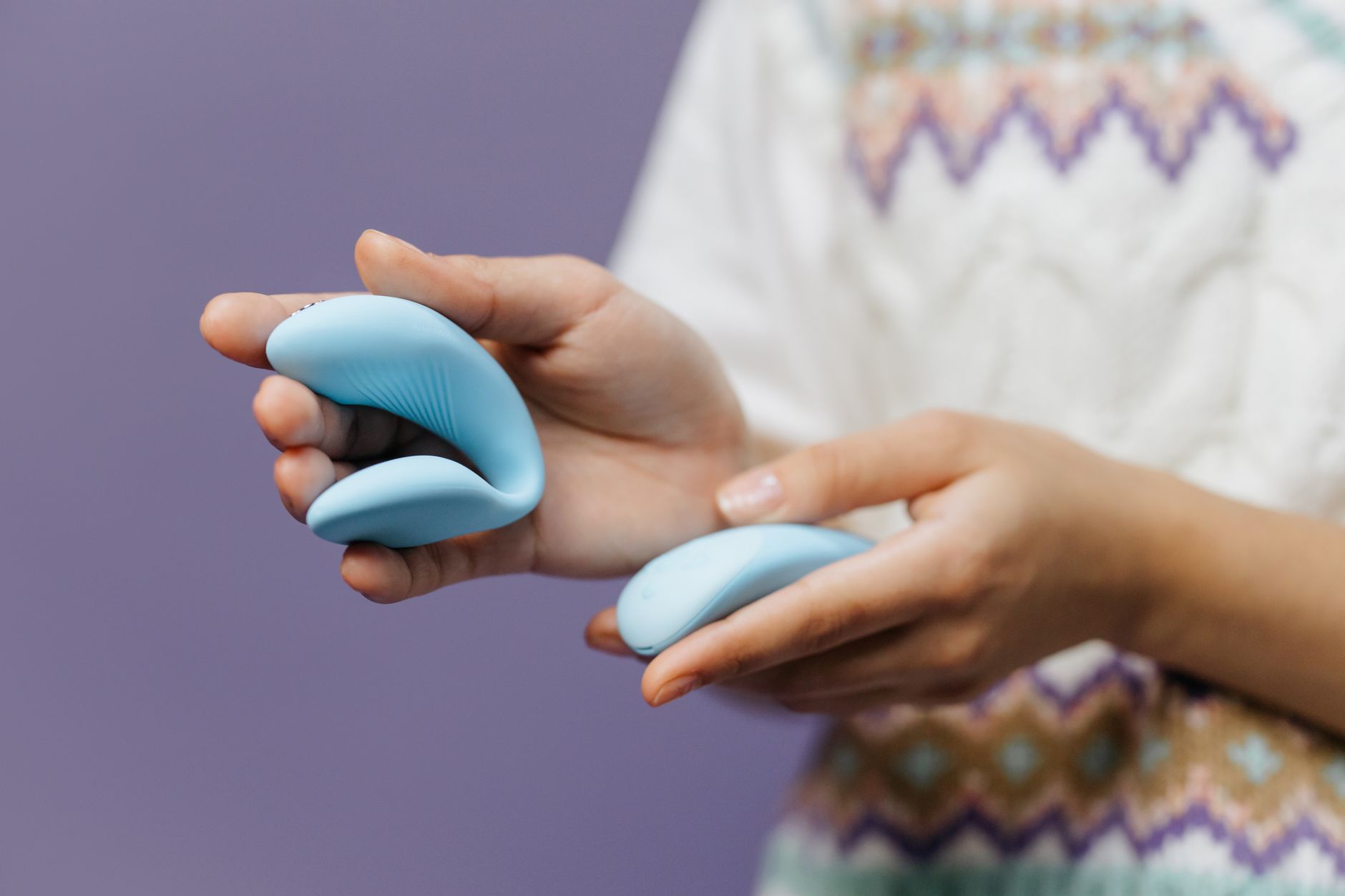
A sleek, intentional device made by people who understand pleasure says: this is legitimate. This is designed for you. This is not shameful. It's the opposite of a toy that apologizes for existing. When you hold a clitoral sucker or lemon vibrator, you're holding something that's unapologetically yours.
That's psychology, not magic. But in my work with couples and individuals, I see that shift happen repeatedly. The device gives you permission to take up space. Permission to prioritize sensation. Permission to close the door and just... have pleasure.
Three ways to move past self-consciousness
First, separate the shame from the act. The shame is taught. The act is neutral. You can examine where the shame came from (your family, culture, religion, earlier partners) without letting it define what you're doing right now in your bedroom, alone, for you.
Second, practice being alone as a positive thing. Not a consolation prize. Not something you do because a partner isn't available. But as a standalone good thing. Time with yourself, your body, your pleasure. Solo play isn't lesser. It's different. And it's essential.
Third, start with one thing that feels slightly less scary. For some people that's dimming the lights. For others it's a specific time of day when the shame feels quieter. For many people, it's using a tool like a lemon vibrator instead of hands, because there's something about delegating the physical action that makes the mental space feel safer. Whatever it is, pick something concrete you can control.
How lemon vibrators specifically help
Lemon clitoral vibrators and similar devices work on sensation in a way that's hard to replicate solo without them. The suction or pulsation gives your body clear, consistent feedback. That clarity helps anchor you. You're not negotiating sensation or wondering if you're doing it right. The device is doing the work.
For people who feel self-conscious, that's crucial. There's less room for your brain to spiral into judgment because your body is getting clear input. The clitoral stimulation is precise enough that it demands your attention in a good way. You have to pay attention to what feels good because the sensation is specific.
You might also find that using a device feels less like "masturbation" in the way you've internalized shame around it. It feels more like self-care. And that linguistic shift, while it sounds small, matters. Your nervous system knows the difference between "doing something shameful" and "using a tool for my own health."
The mental habit that needs to shift
This is where I push gently: self-consciousness during solo play is often a habit. You've practiced it so many times that it feels automatic. The good news is that means you can practice something different.
That means picking a time when shame feels quietest and deliberately using that time for solo exploration. Not trying to come. Not performing. Just noticing. What feels good right now. What makes your body want to move. What's satisfying versus what's just stimulation.
If your brain tries to bring in judgment, acknowledge it: there's that thought. And then come back to sensation. What does this feel like. That's it.
After 3, 4, 5 intentional sessions focused on sensation over outcome, your nervous system starts to rewire. The shame doesn't evaporate instantly. But it quiets. And quiet is enough to let pleasure in.
When to seek outside help
If the self-consciousness is connected to trauma, or if it's so severe you can't be alone with your body without significant distress, talking to a therapist who specializes in sexual health is worth it. Shame that deep sometimes needs more than reframing. It needs processing.
But most people with solo play self-consciousness just need permission plus a tool plus intentional practice. The lemon vibrator or another quality clitoral toy can be part of that. Not the whole answer. But a significant part.
Your pleasure is not a luxury. It's a part of being alive in your body. Solo play is one way you practice being present with yourself. And that presence matters, not because it's practice for partnered sex, but because you deserve it. Right now. Alone. For you.
Frequently asked questions
How do I stop feeling guilty about using vibrators alone?
Guild often comes from messages you learned early that your body is for someone else to enjoy, not for you to use. Start by examining where that came from specifically. Was it your family's approach to sexuality? Religious teachings? Earlier partners? Once you name it, you can separate it from what you actually believe about your body now. Then practice the opposite: solo time as something you choose, a clitoral vibrator as a neutral tool, and sensation as the only goal. The guilt quiets when you practice self-permission repeatedly.
Why does using a lemon vibrator feel less shameful than hands?
Partially because a designed tool feels intentional rather than desperate. A lemon clitoral vibrator was made for this specific purpose. Using it says you're taking your pleasure seriously, not sneaking around your own body. There's also a practical element: the device does the physical work, which frees your mind to be present instead of managing the mechanical action. That presence is what actually kills shame.
Can self-consciousness during masturbation affect partnered sex?
Absolutely. If you're not comfortable with your own pleasure, it's hard to ask for pleasure from a partner or to accept it when offered. Solo play teaches you what you like and helps you stay present with sensation. If shame blocks that, it often bleeds into partnered sex as difficulty receiving pleasure or communicating desire. Working through solo play shame is actually foundational to better partnered sex.
Is it normal to feel awkward the first time using a clitoral vibrator?
Completely normal. A new device changes the whole scenario. It can feel clinical or weird at first. That's why starting with one session focused only on sensation, not outcome, helps. Notice what the stimulation feels like. Is it too intense, too soft, rhythmic, pulsing? Curiosity takes the pressure off. After 2-3 sessions, the awkwardness usually passes and you start finding what actually works for your body.
What if I can't orgasm during solo play even without shame?
Orgasm isn't the only measure of successful solo play. Some people focus on sensation, some on relaxation, some on understanding their body. If shame isn't the issue and you want to explore orgasm, that's a different conversation. Read through guides on how to use lemon vibrators when you have low sensation during partnered sex or how to regain pleasure sensitivity after years of numbing for practical techniques. But solo play is valid even if it ends without orgasm.
How long does it take to feel more confident with solo play?
Most people notice a shift within 2-3 weeks of intentional practice. That doesn't mean shame vanishes. But the panic quiets. Your body starts to feel like yours again instead of something you're judging. Consistency matters more than intensity. Two brief sessions weekly where you're actually present beats one marathon session where you're spiraling in shame. Pick something sustainable and stick with it.