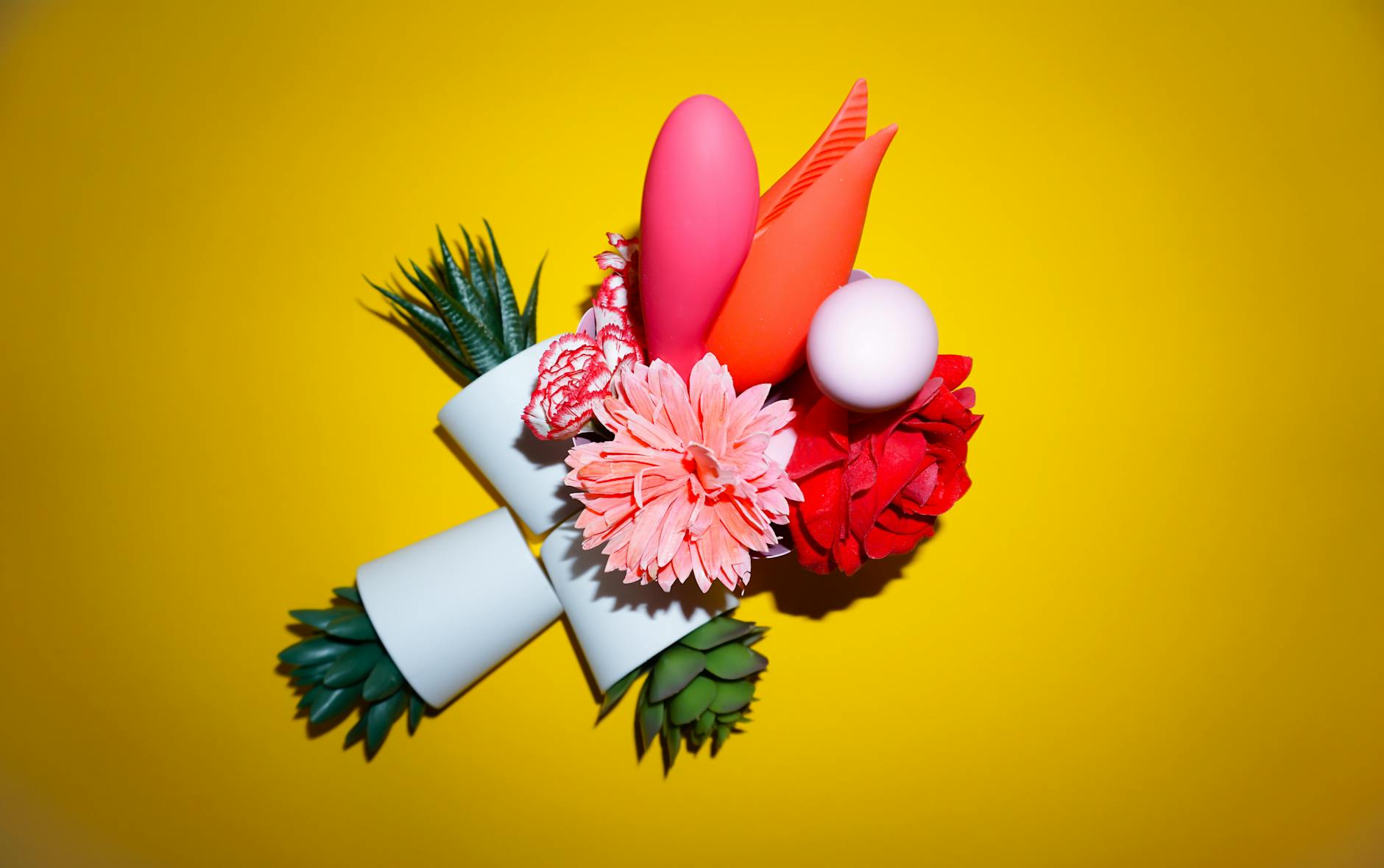
Let's be real about what menopause actually does to pleasure
Estrogen drops. Your tissue changes. Lubrication shifts. Arousal takes longer to build. And then there's this: most of what you've heard about menopause and sex is either doom or denial. Neither helps. What actually helps is understanding exactly what's happening in your body, and choosing tools designed for post-menopausal tissue, like lemon vibrators and other clitoral toys specifically engineered for changing physiology.
The good news isn't a polite lie. Many people report their best orgasms happen after menopause, not before. That's not luck. It's biomechanics meeting clarity.
How estrogen decline changes tissue (and what it means for sensation)
Estrogen keeps vaginal and clitoral tissue thick and well-oxygenated. When it drops during menopause, that tissue thins. It becomes more delicate, less elastic, more sensitive to direct pressure. This is called genitourinary syndrome of menopause (GSM), and it's real and incredibly common.
But here's what doesn't change: the nerve density in your clitoris. The neural pathways that fire during arousal. Your brain's capacity for pleasure. The ability to orgasm, sometimes intensely.
What changes is the type of stimulation that works best. Direct, high-friction pressure that felt amazing at 35 might feel uncomfortable at 55. That's not a loss of pleasure. It's a shift in mechanics. And lemon vibrators, with their gentle suction design, align perfectly with post-menopausal tissue rather than fighting against it.
Why suction-based stimulation works better after hormonal shifts
Most clitoral toys use vibration alone. They press. They buzz. They require friction. That works fine when tissue is thick and less sensitive. After menopause, that intensity can be too much.
Lemon sexual toys like the Lem use air-suction technology. They don't press. They draw gently. They work with your tissue rather than against it. This matters because:
Suction stimulates nerve clusters without the mechanical pressure that can irritate thinner tissue. You get intense sensation from lift and pulse, not from friction. The experience is deeper, less surface-level. Many people find post-menopausal orgasms with suction-based toys feel more concentrated, more full-body.
You're not compensating for loss. You're adjusting to change. The lemon vibrator isn't a workaround for aging tissue. It's a tool optimized for the tissue you have now.
The physical adjustments that actually matter
Three things change how lemon clitoral vibrators feel post-menopause:
1. Warm-up time. Arousal takes longer. Budget 15 to 25 minutes instead of 5. Your nervous system needs time to redirect blood flow. Rushing doesn't work. Patience does.
2. Lubrication. Use water-based lubricant every single time, even if you don't think you need it. Thinner tissue benefits from the glide. It's not about being broken. It's about making the experience better. The Lem works beautifully with lube, and you'll notice the difference in sensation depth.
3. Starting intensity. Begin at pattern 1 or 2 on your lemon vibrator. Work up slowly. Your tissue will adjust, and you'll discover where your peak sensitivity actually lives now. Often it's stronger than you expect.
The emotional piece nobody talks about
Menopause doesn't happen in a vacuum. It arrives tangled with other midlife shifts. Grown kids. Relationship changes. Career questions. Grief. The temptation is to blame everything on hormones.
Sometimes pleasure shifts because your body has changed. Sometimes it's because your mental load has changed, and your brain has no bandwidth left. Those are different problems needing different solutions.
If you're with a partner, separate the conversations. "My body is responding differently to touch" is not the same conversation as "I want us to reconnect." If you treat them as one problem, you'll solve neither.
Why lemon adult toys feel different (and better) on post-menopausal bodies
Lemon clitoral vibrators deliver stimulation in waves rather than constant pressure. That rhythm matches post-menopausal tissue response better than traditional vibrators. You're not fighting sensitivity. You're using it.
The suction creates a seal. That seal focuses sensation. Compared to a wand vibrator or bullet, the Lem and similar lemon sexual toys concentrate intensity without the broad, surface-level buzz. Post-menopausal nerve clusters respond more to focused, pulsed stimulation.
You'll also notice that arousal, once it builds, tends to build faster with suction. The mechanism bypasses some of the friction fatigue that can come with traditional vibration on delicate tissue.
When to layer in additional support
If penetration feels uncomfortable, topical estrogen creams are game-changing and have minimal systemic absorption. A menopause-trained GP or gynecologist can prescribe them in weeks.
If desire has completely vanished and isn't returning with exploration and time, testosterone therapy is worth discussing. It's underused in the US but prescribed more commonly in the UK and Australia. For the right person, it transforms everything.
If pain appears, don't wait to address it. Most post-menopausal sexual discomfort is highly treatable. You don't have to live with it, and addressing it early makes exploration with lemon vibrators and other tools much more enjoyable.
The real difference between menopause and decline
Menopause isn't the end of your sexual life. It's the middle chapter, and in many ways, the most interesting one. You've spent decades learning your body. You've typically built stronger pelvic floor awareness. You often have less societal pressure to perform for a partner. You're exploring pleasure on your own terms.
Lemon clitoral vibrators, designed for post-menopausal tissue response, amplify all of that. They're not a consolation prize for aging bodies. They're optimized for the exact tissue you have right now. That's the distinction that changes everything: not compensation, but alignment.
FAQ: Hormonal changes and lemon vibrators
Do lemon vibrators work if I'm on hormone replacement therapy?
Yes. HRT can ease some tissue thinning, but many people still prefer suction-based stimulation even while on HRT. The sensation is just different, not better or worse. Experiment and see what feels right for your body. If HRT has helped your tissue bounce back, you might find you enjoy multiple types of clitoral toys. The Lem and similar lemon sexual toys still offer something unique: the focused, pulsed stimulation that many post-menopausal people find most satisfying, regardless of hormone status.
How long does it take for my body to adjust to a lemon vibrator after menopause?
Usually three to five sessions. Your tissues adapt quickly once you introduce consistent, gentle stimulation. Start slow, use lubricant, and give yourself permission to explore without a specific outcome in mind. Many people notice deeper sensation by the third use and stronger orgasms by the fifth or sixth. Your nervous system also needs time to recognize this new type of stimulation, so patience compounds the results.
Can I use a lemon clitoral vibrator if I have vaginal atrophy?
Absolutely. In fact, gentle, consistent stimulation with tools like lemon vibrators can help improve blood flow to the area over time. That said, if penetration is painful or tissue feels severely compromised, start with external clitoral stimulation only (the Lem is perfect for this). Add lubricant. If pain persists or worsens, consult a menopause specialist before progressing. Many cases of severe atrophy respond beautifully to topical estrogen before returning to exploration with toys.
Does the Lem or other lemon sexual toys work if I'm on antidepressants?
Yes. Antidepressants can numb sensation, but suction-based stimulation often cuts through that numbness better than traditional vibrators because the mechanism is so different. The focused, pulsed approach can reawaken pathways that SSRIs dull. That said, some people need both medication adjustment and tool selection. If desire is completely flat, talk to your prescriber before assuming the toy is the missing piece. Sometimes it's the medication itself, and sometimes it's both things together.
Should I use a lemon vibrator on the highest setting after menopause?
No. Start low and increase gradually. Post-menopausal tissue is more sensitive, which sounds like it should feel better. It does, but it also means your threshold for comfortable intensity might shift lower than it was before. The Lem's gentler patterns often deliver more pleasure than maxing out intensity on older toys. Explore the full range. You'll probably find your peak sensation comes at pattern 3 or 4, not at the ceiling.
How does lube affect sensation with a lemon vibrator post-menopause?
It deepens it. Lubricant reduces friction, which means less irritation and more focus on the suction and pulse sensations the Lem delivers. Water-based lube is best (silicone-based can degrade silicone toys). The glide actually allows you to notice the subtle patterns more clearly because your nervous system isn't distracted by surface friction. Many people report that adding lube to their first few Lem experiences unlocks sensation they didn't know was there.
The bottom line: menopause is a design shift, not a decline
Your body is different. Your tissue is different. Your capacity for pleasure isn't lower. It's just oriented differently. Lemon vibrators and other clitoral toys engineered for post-menopausal tissue acknowledge that shift and work with it instead of against it.
You've spent decades learning your body. You've earned clarity about what you want. You deserve tools that match who you are now, not who you were at 25. The Lem and similar lemon clitoral vibrators exist because menopause happens, bodies change, and pleasure matters at every age.
If you're ready to explore what your post-menopausal body is actually capable of, those answers are waiting. Start with patience, add lubricant, and give yourself time. What emerges is often richer than what came before.
Have questions about navigating intimacy and pleasure as your body changes? We're here to help. Reach out anytime.
References:
Goldstein, I., et al. (2016). The International Society for the Study of Women's Sexual Health glossary of gynecologic sexual health disorders in women: terminology and definitions. The Journal of Sexual Medicine, 13(10), 1463-1475.
MacLennan, A. H., et al. (2004). Hormone therapy, timing of initiation and cognition in women aged older than 60 years: the REMEMBER pilot study. Menopause, 11(1), 28-36.
Lindsay, R., & Gallagher, J. C. (2003). Effects of hormone replacement therapy on bone resorption markers and bone density. The Journal of Clinical Endocrinology & Metabolism, 88(4), 1618-1623.