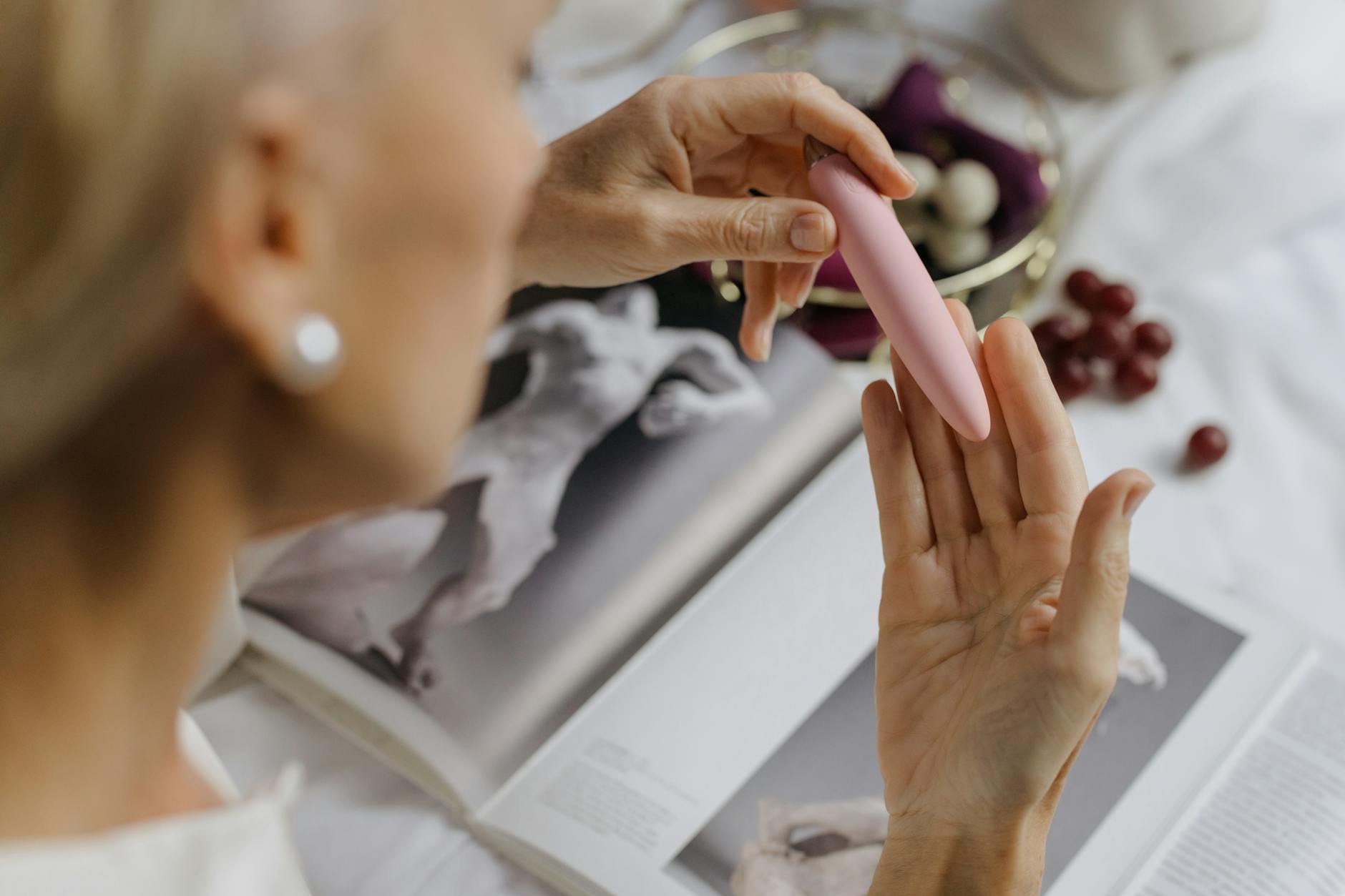
Let's name what's actually happening
You want sex more often than your partner does. That's not a sign you're incompatible. It's also not something you need to feel guilty about, and it's definitely not something your partner should dismiss as "too much." Desire mismatch is one of the most common friction points in long-term relationships, and almost every couple navigates it at some point.
Here's what happens in most partnerships: the person with higher desire either suppresses it, settles for less frequent sex, or both. Then resentment builds quietly, like rust under paint. The partner with lower desire feels pressured, which tanks their own arousal further. Neither of you wins.
There's a third path, and it starts with this idea: your pleasure doesn't need to wait for your partner's initiation.
The actual problem with mismatched desire
When you're waiting for your partner to want you, two things go wrong simultaneously.
First, you're making your arousal someone else's responsibility. That's a lot of weight to place on another person. They feel the pressure. You feel the rejection. The gap between your desire and theirs becomes the focal point of every conversation about sex, which makes it worse.
Second, you're training your body to wait. Arousal works better when it flows naturally, not when it's trying to sync with someone else's timeline. The longer you suppress your own desire in order to match your partner's, the harder it gets to access that pleasure when they finally do initiate.
This is where lemon clitoral vibrators enter the picture. Not as a band-aid or a replacement for partnered sex. As a way to reclaim your own pleasure as independent from your partner's availability.
Why solo pleasure actually strengthens partnerships
I know that sounds counterintuitive. Shouldn't more solo play mean less interest in partnered sex?
The opposite happens. When you're regularly experiencing pleasure on your own terms, three things shift.
You stop resenting the gap. If your partner wants sex twice a week and you want it four times, solo play on your own schedule takes the pressure off those two shared sessions. They become something you both actually want, rather than something you're trying to negotiate.
Your body remembers how to be aroused. Regular solo pleasure keeps your nervous system responsive. You're not relying on your partner's initiation to "activate" your desire. It stays accessible, which makes you a more engaged partner when you are together.
You have better conversations. When you're not desperate for your partner to want you, you can talk about desire mismatch without emotional charge. You can say "I need solo time with this, and I also want us to connect more often" instead of "Why don't you ever want me?"
How to introduce lemon vibrators without making your partner uncomfortable
This is the part people worry about most. Will your partner feel threatened? Will they think you're replacing them?
You prevent that by being honest and matter-of-fact about it. Not apologetic, not secretive.
The conversation looks like: "I've realized I need to take care of my own pleasure more regularly. I'm going to use a vibrator for solo play. I wanted you to know because I value transparency." Then stop talking. Don't over-explain. Don't ask permission. You're informing them, not asking approval.
If your partner pushes back, listen to what's underneath. Usually it's one of three things: they feel like they're failing you (they're not), they feel judged for lower desire (also not true), or they're worried about the role of toys in your partnered sex life (which is a separate conversation).
Keep those conversations distinct. Solo play with a lemon vibrator is about you. Partnered sex is about both of you. Those can coexist comfortably.
Setting up a solo practice that actually works
If you're going to reclaim this part of your pleasure, you need practical systems.
Claim a specific time. Not whenever you feel like it, but an actual rhythm. Thursday evenings, Sunday mornings, whatever fits your schedule. Desire often builds with anticipation. Knowing you have dedicated time makes the whole week feel different.
Create privacy that feels non-defensive. A locked door is enough. You don't need to hide or sneak. Matter-of-fact privacy is actually hotter than secretive privacy. Your partner doesn't need to be in the room, but they don't need to wonder if you're ashamed of what you're doing either.
Start low pressure. If you've been suppressing desire for a while, your body might need permission to wake back up. Don't expect fireworks immediately. A clitoral vibrator like the Lemon Clitoral Vibrator works well because it's intuitive and reliable. Start on lower settings, give yourself 20 to 30 minutes even if nothing happens, and trust that consistency builds.
Use the right tool for sensitivity. When you've been in a cycle of suppressed desire, your tissue sometimes becomes less responsive or more tender. A suction-style vibrator removes the guesswork. It's gentler than direct vibration on sensitive areas, and the sensation itself is often more intense because it's working differently than hands or a partner would.
What this does to your partnered sex life
Here's the plot twist that surprises people: solo pleasure with a vibrator usually makes your partnered sex better, not worse.
When you're not desperate for your partner to initiate, you actually become the one who initiates more. You're aroused. You remember what you like. You're confident. Those are attractive qualities. Your partner often responds to that energy.
Second, you bring better presence to shared time. You're not spending your energy wishing for sex or resenting the gap. You're actually in the room with your partner instead of mentally checking out.
Third, if your partner is willing, solo play can become something you do together sometimes. Not every time, but occasionally using a lemon vibrator while your partner watches or participates can bridge that initiation gap in a way that feels collaborative rather than competitive.
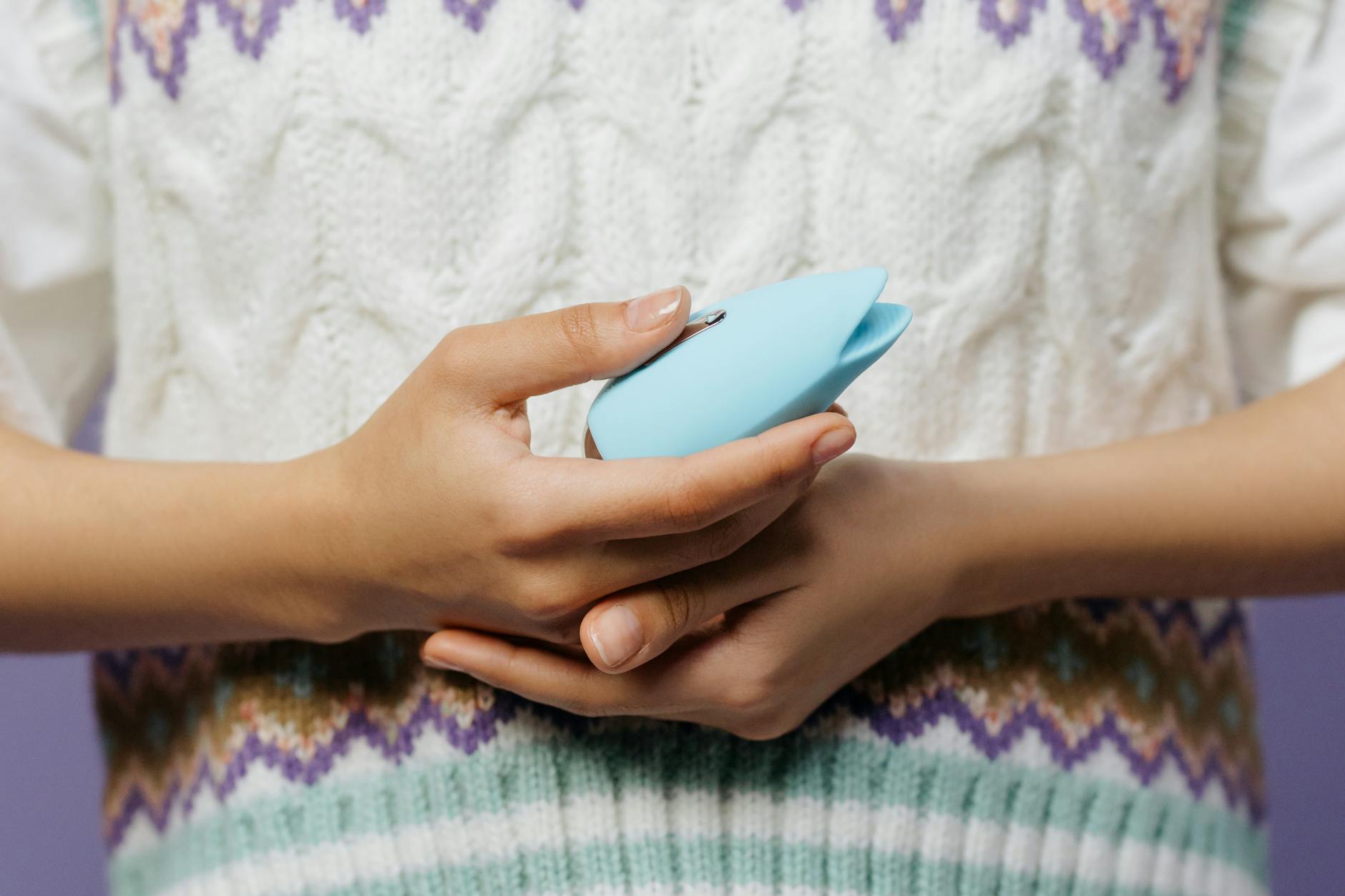
Photo by cottonbro studio on Pexels
When to have the follow-up conversation
After you've established solo pleasure as part of your routine, you might want to circle back with your partner about the bigger picture.
This conversation is not about demanding more sex. It's about understanding what's going on with them. Is their lower desire about you, about life stress, about medication, about their own arousal capacity? Those are different problems with different solutions.
If your partner's low desire is actually low libido due to medication or hormones, that's medical. If it's about being touched out or overstimulated, that's a boundary worth respecting. If it's about disconnection or conflict, that's relational work.
Your solo practice buys you time and emotional space to figure out which one it is. And sometimes, just having that space changes the dynamic enough that the gap naturally narrows. You're both more relaxed. The pressure is off. Paradoxically, that often leads to more frequent partnered sex, not less.
The relationship-level piece
Desire mismatch is often a symptom of something else. If you're initiating less than you want because you feel rejected or resentful, that's worth examining. If your partner is initiating less because they feel pressured or unseen, that's also worth looking at.
A Lemon Clitoral Vibrator is a tool for your pleasure, not a solution to relational distance. If the gap in desire is tied to bigger issues, like how to use lemon vibrators when intimacy has stalled in a long-term partnership or poor communication about needs, those need separate attention.
But starting with your own pleasure gives you solid ground to stand on while you do that work. You're not coming from a place of desperation. You're coming from a place of self-respect.
People also ask
Will using a vibrator make my partner feel replaced?
Only if you frame it as a replacement. If you're honest that this is about your own arousal and separate from your relationship, most partners can adjust. The key is not being secretive. Transparency actually reduces threat because your partner doesn't have to imagine what's happening.
How often should I use a lemon vibrator if my partner and I are already having regular sex?
As often as you want. There's no rule. Some people use them multiple times a week for solo play, then also have partnered sex. Others use them primarily solo and partnered sex is less frequent. What matters is that your overall arousal stays alive and responsive, not that you hit some arbitrary number.
Can lemon sexual toys actually help if my partner has very low desire?
They can help you personally. They won't change your partner's desire on their own. But they can change the emotional dynamic between you two by removing the pressure to make each other's pleasure happen. From there, real conversations become possible.
What if my partner wants to use a vibrator together but I'm not sure I want that?
That's a completely separate conversation from solo play. You don't have to do everything your partner suggests, and they don't have to participate in your solo practice. Boundaries around lemon clitoral vibrators are just as valid as any other boundary.
If I start using vibrators solo, will partnered sex start to feel boring?
Not if you approach solo play as separate rather than competitive. The sensations are different. The dynamic is different. Both can coexist. Many people actually prefer partnered sex because of the intimacy and presence element, even if the physical sensation of a vibrator is more intense.
How do I know if desire mismatch is the real issue or if there's something else going on?
Pay attention to what changes when you start a solo practice. If the resentment softens, it was probably desire mismatch. If it doesn't change the emotional temperature between you two, there's likely relational work needed too. Both can be true.
The real point
Your pleasure belongs to you. It doesn't require your partner's initiation or permission. Reclaiming that autonomy doesn't mean you care less about partnered sex. It means you're taking responsibility for your own arousal and stopping the blame cycle before it starts.
If you want to explore this territory further, our buying guide walks through different styles of lemon vibrators and how to choose based on your sensitivity and preference. The right tool makes this transition feel easier, not like you're solving a problem. You're just taking care of yourself.
Honestly? That's the strongest foundation any partnership can have.