Let's address the elephant in the room first
Honestly? Most people introduce vibrators to partnered sex while convinced their partner will feel "replaced" or emasculated. That fear is real, understandable, and almost never what actually happens. The real fear is usually about vulnerability. You're asking to be seen wanting something, needing something, being touched in a specific way. That's the conversation people get nervous about.
Introducing lemon vibrators into your sexual routine with a partner isn't about performance or replacing anything. It's about getting clearer on what feels good so you can both enjoy sex more.
Why the conversation feels harder than it is
Your brain is likely running a movie where you say "I want to use a vibrator" and your partner hears "you're not enough." They don't. What they actually hear (if you frame it right) is "I want more pleasure, and I want to share that with you."
The frame matters. A lot.
Instead of "I need a vibrator because I can't finish without one," try "I've noticed clitoral vibrators feel amazing for me, and I'd love to use one together sometimes." Same fact, different emotional weight. One sounds like a problem to solve. The other sounds like an invitation.
Three conversation starters that actually work
Option 1: The curiosity angle. "I tried this clitoral vibrator on my own and it felt really good. I'm curious what it would feel like to use it together. Want to try?"
Option 2: The pleasure angle. "I want to explore what gets me off. I think bringing in a vibrator would be fun for both of us. I read this thing about it."
Option 3: The direct ask. "Can we talk about trying something new in bed? I'm thinking about using a lemon vibrator sometimes, and I wanted to see how you felt about that."
Pick whichever feels most honest. Your partner cares way more about your genuine interest than they do about the specific words.
Positioning and technique for partnered use
Once the conversation is done, the actual mechanics are simple.
During penetration. Most couples use lemon vibrators on the clitoris during penetration. Your partner enters as usual, and you (or they) hold the vibrator against your clitoris. The sensation of fullness plus clitoral stimulation often creates a more intense orgasm. Start at a lower intensity setting. You can always turn it up. The Lem vibrator is small and quiet enough that positioning is easy from almost any angle.
During foreplay. Use it before penetration while your partner touches you elsewhere. Hand control during this phase teaches them exactly where and how you like pressure, which is useful information for future sex.
During oral. Some people use lemon clitoral vibrators while receiving oral sex. Others find the double stimulation too intense. That's information worth discovering together.
The receiving partner's role. Your partner doesn't have to do anything elaborate. They can hold the vibrator while you guide the angle. They can focus on penetration while you handle the vibrator. They can watch (yes, really), which sounds awkward but often turns into something both people enjoy. The point is: this isn't about them operating a machine. It's about both of you being present.
Setting expectations before you start
Tell your partner three things:
- What you're trying. "I want to use this clitoral vibrator during sex tonight."
- What you want from them. "I'll handle it, I just want you here with me" or "I'd love if you held it" or "I want to try it during foreplay first."
- That you might need to adjust. "It might take a minute to find the right angle. Let's just play around and see what feels good."
This prevents the awkward silence where everyone's pretending nothing strange is happening. You're naming it directly, which makes everything feel less weird.
The pleasure payoff (why you're doing this)
Here's what usually happens: once a partner sees how much pleasure a vibrator brings, their entire relationship to it shifts. It stops being about "needing help" and starts being about "I get to watch my partner feel amazing." That's a completely different energy.
Many couples find that using clitoral vibrators together actually improves their sex life overall because you're communicating more directly about pleasure. You're less likely to fake it. You're more likely to try new things. You're thinking about sex as something collaborative instead of something you perform.
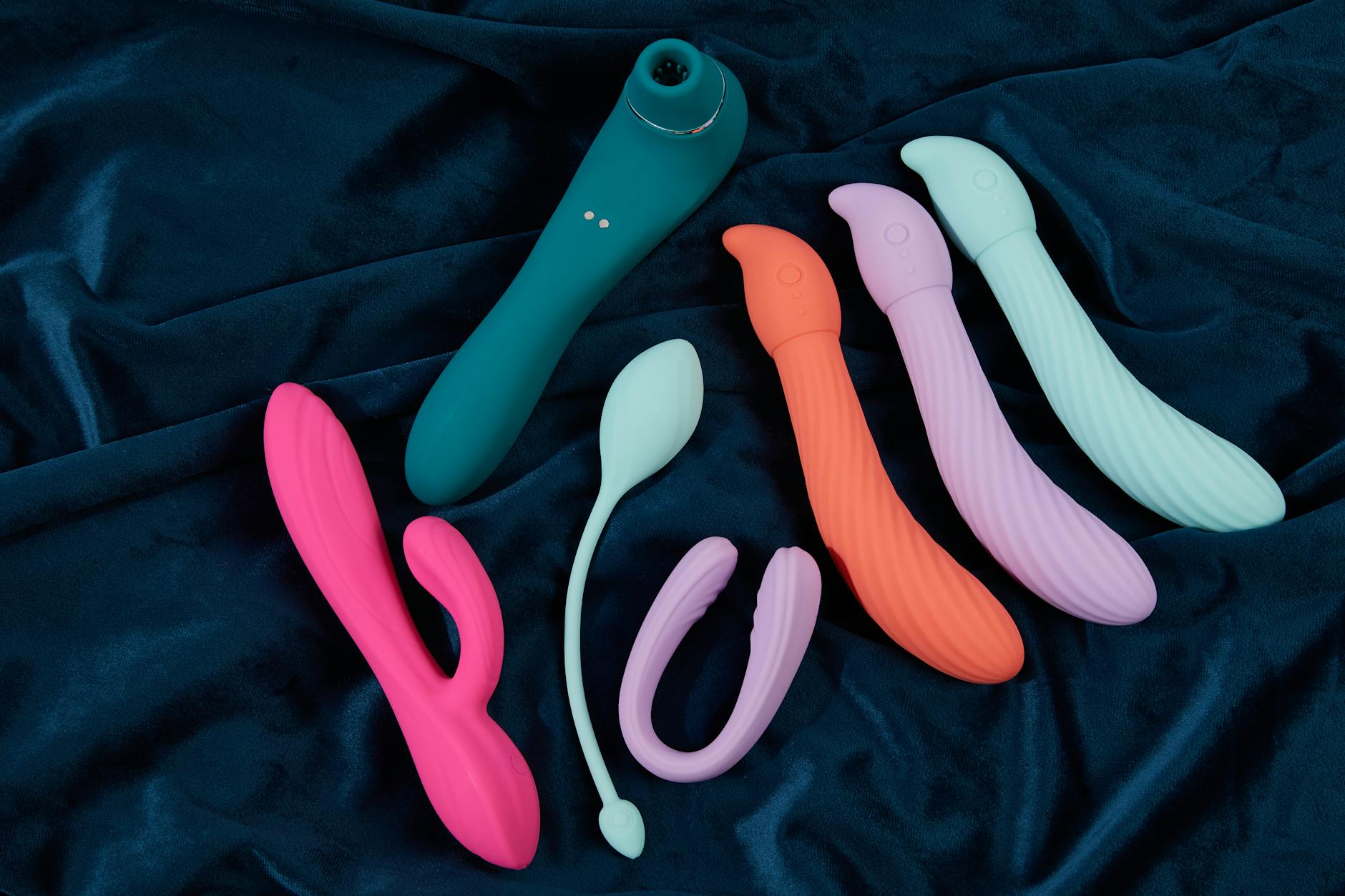
Photo by IFONNX Toys on Pexels
Common scenarios and how to handle them
If your partner seems hesitant. Don't argue. Instead, ask what the hesitation is about. Often it's not about the vibrator itself but about feeling inadequate or worried they're doing something wrong. Reassure them that you want them there, you just want to explore what feels best.
If the angle is awkward. Pause and adjust. You might need a pillow under your hips. You might need your partner at a different angle. This is all normal and worth the few seconds it takes to get right.
If orgasm doesn't happen. That's fine too. Pressure to perform with a vibrator present is real, and it can actually make orgasm harder. If that happens, just enjoy the sensation and try again another time. Your body isn't broken.
If your partner wants to take the lead. Great. Guide them. "A little faster," "lighter pressure," "right there." This is useful feedback they should have anyway.
The difference between a lemon vibrator and other clitoral toys
If you're choosing between lemon vibrators and other options, the main thing to know is that lemon sexual toys use suction or pulsing rather than vibration. That means the sensation is gentler and more localized. This matters for partnered play because it's less jarring, quieter, and easier to control during sex. If you're just starting to introduce vibrators to your relationship, a lemon clitoral vibrator is often easier than a traditional wand vibrator, which can feel more intense and is harder to position during penetration.
After it's over: the conversation that matters
Once you've tried it, talk about it. Not in a clinical way, but genuinely. "That felt really good." "I liked watching you." "Let's do that again." "I want to try it differently next time." These conversations are where real intimacy lives.
The goal isn't to turn every sexual encounter into a production. It's to expand your toolkit so that sometimes, when you want something specific, you have it available. Most couples who start using lemon vibrators with partners find they actually use them less often than they thought they would. But having the option, and having had the conversation, changes the whole dynamic of sex.
Your pleasure matters. A partner who wants you to feel good cares way more about that than they do about being the sole source of stimulation.
People also ask
Will using a lemon vibrator with my partner make them feel inadequate?
Not if you frame it as exploration rather than substitution. Many partners actually feel more connected after introducing vibrators because the conversation forces you to talk about pleasure directly. Instead of guessing, you're asking. Instead of faking, you're honest. That builds intimacy. A partner who feels threatened by a vibrator usually has underlying insecurity that needs addressing separately, not something the vibrator caused.
Can I use a lemon clitoral vibrator during penetration without it being uncomfortable?
Absolutely. The lemon vibrator is small and designed for this. Most people hold it against their clitoris while their partner enters. The vibration doesn't interfere with penetration, and many people find the combination creates their most intense orgasms. You might need to experiment with positioning and angle, but it's very doable.
What if I can only orgasm with a vibrator now? Is that bad?
No. Your body has learned what works for you. The same way some people need glasses to see clearly, some people benefit from vibration for orgasm. That's not weakness or dysfunction. If partnered sex without a vibrator stops feeling satisfying, that's worth addressing separately, but using a lemon vibrator is not the problem.
How do I introduce the idea without making it weird?
The key is treating it like a normal thing, because it is. You're not asking permission or apologizing. You're sharing information. "I want to try using my lemon vibrator during sex sometimes. I think it could feel really good for both of us." Direct, casual, done. The weirdness lives in the silence before you say it, not in the saying itself.
Is it okay if my partner wants to use the vibrator on me?
Yes. In fact, many couples find this becomes their preferred method. Your partner gets to focus on other things while controlling the vibrator, and you get to guide them. This often increases connection because there's active participation from both people. Just communicate about pressure, speed, and angle as you go.
What if we try it and it doesn't feel good?
Then you know lemon vibrators aren't for you, at least not in that context. Or maybe it was the angle, the timing, or the intensity setting. Try adjusting one variable at a time and see if that helps. You could also try a different lemon sexual toy model, since each device has slightly different sensations. And if vibrators simply aren't your thing, that's valid too. The point of these explorations is to expand what feels good, not to force something that doesn't.
The real reason to do this
Introducing lemon vibrators to partnered sex isn't about fixing a problem or improving performance. It's about choosing to know yourself better and inviting your partner into that knowledge. You're saying, "This is what I like. I want to share this with you." That vulnerability, that honesty, is where real intimacy builds. The vibrator is just the vehicle.
Start the conversation. The rest follows naturally from there. If you want more guidance on navigating these conversations or strengthening overall intimacy, reach out at /contact.