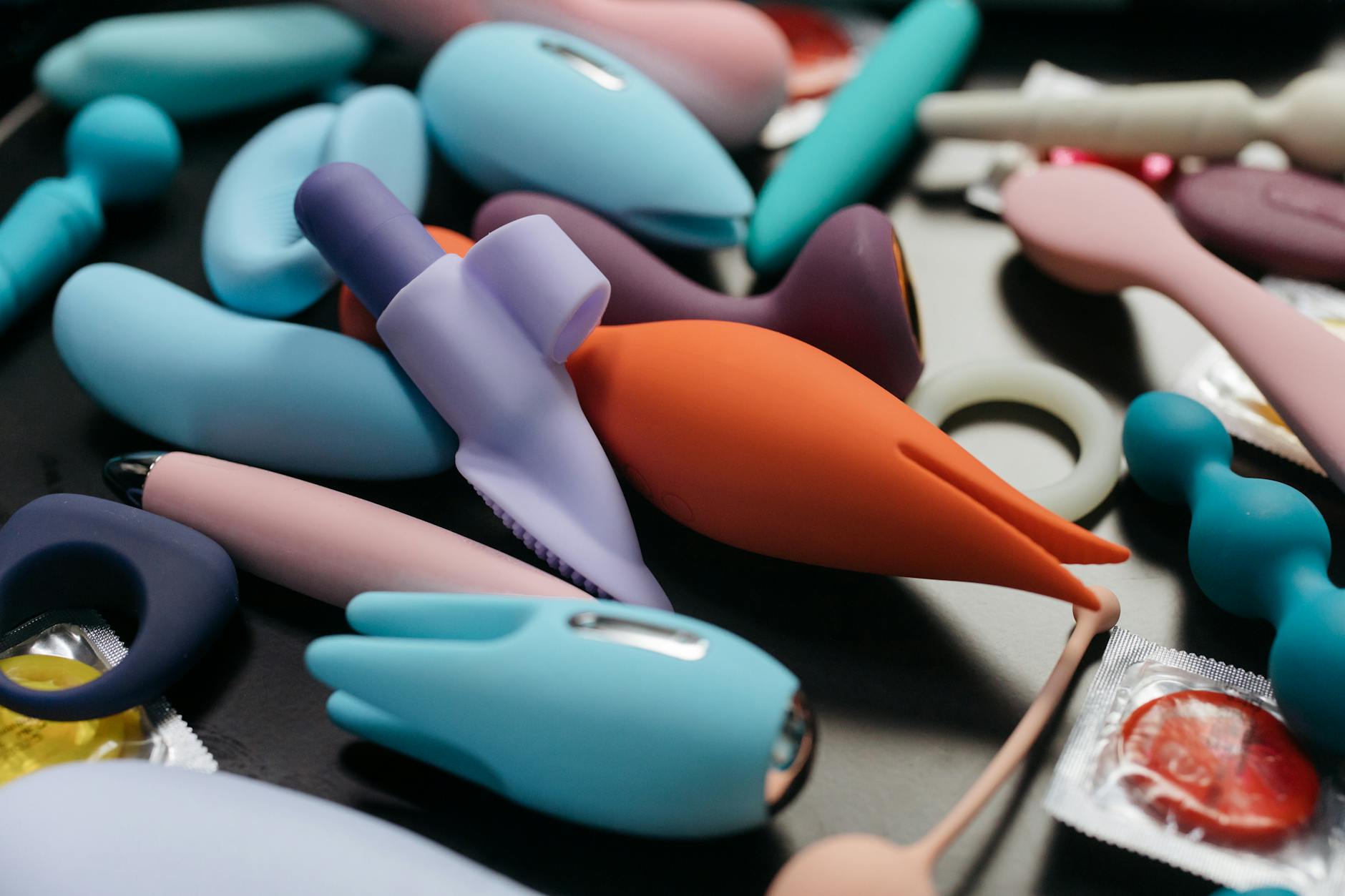
How to Use Lemon Vibrators When Intensity Overwhelms Your Nervous System
Let's be real: most vibrators are designed for one thing. Maximum stimulation, maximum speed, maximum intensity. And for some people, that's perfect. For others, it's a fast track to nervous system overload.
If you've ever felt a vibrator and immediately felt jittery, anxious, or like your whole body was being shock-treated, you're not alone. And you're not broken. Your nervous system just processes stimulation differently. The good news: lemon vibrators, especially clitoral designs, work beautifully for people who need intensity they can actually control.
Here's what I've learned working with clients who experience sensory sensitivity and what changes everything about pleasure when you stop fighting your nervous system and start working with it.
Why standard vibrators overwhelm sensitive nervous systems
Most vibrators buzz at a single speed or cycle through preset patterns you can't fine-tune. That means your nervous system gets flooded instantly. For people with anxiety, ADHD, trauma responses, or simply a lower sensory threshold, that flood switches the body into fight-flight-freeze mode instead of pleasure.
Your parasympathetic nervous system (the one that allows arousal and pleasure) needs a gentle escalation to activate. A jolt doesn't trigger it. A shock shuts it down.
Lemon clitoral vibrators use suction and pulsing rather than traditional buzzing, which means the stimulation ramps differently. You're not getting a wall of vibration. You're getting a wave. That distinction matters for anyone whose body tightens under pressure.
Start lower than you think
Most people assume "lower setting" means boring or ineffective. Wrong. A lemon vibrator on its gentlest setting often creates sensation that travels deeper and feels less scattered than a standard vibrator on medium.
Start at level 1. Spend five to ten minutes there. Let your nervous system settle. You'll notice something: as you relax, sensation actually intensifies. That's not a trick of the device. That's your body's natural response when it feels safe.
Many of my clients find they never move past level 2 or 3, and their orgasms are more satisfying than anything they've experienced with higher-power toys. Less noise in the system means more signal.
Build your rhythm gradually, not your speed
Here's a technique that works: instead of increasing vibration level, increase how long you spend at each level. Spend two minutes at level 1, then two at level 2. No jumping around.
This teaches your nervous system to trust the escalation. Trust is what allows deeper arousal. Without it, you stay in shallow, alert pleasure that feels more like stimulation than satisfaction.
You can also vary the rhythm pattern (if your device has it) without increasing intensity. Pulsing, waves, and steady patterns feel wildly different even at the same power level. Explore the patterns before you explore the power.
Create physical safety signals
Your nervous system doesn't separate physical safety from emotional safety. If you're using a lemon vibrator in a position where you feel exposed, rushed, or like you have to perform, your parasympathetic system stays locked out.
Take time to set up the space. Soft lighting, a closed door, something comfortable to lie on. A blanket nearby. Knowing you have 30 minutes, not 10. Knowing your partner isn't in the next room waiting.
These aren't luxuries. They're essential infrastructure for someone with sensory sensitivity. Your nervous system reads the environment and decides whether to open or close.
Water-based lubricant is non-negotiable
Dry stimulation on sensitive tissue triggers a protective tightening response. You'll feel like you need to brace yourself. Lubrication removes that. It's not about comfort. It's about nervous system safety.
Use more than you think you need. Reapply halfway through. A well-lubricated experience feels completely different from one where friction is present.
The breathing piece nobody mentions
Most people hold their breath during arousal. Your nervous system interprets that as danger. Breathe steadily, especially when you feel yourself accelerating toward orgasm.
This sounds simple. It's transformative. Breathing tells your parasympathetic nervous system that everything is fine, that you're not in a threat response. Your body learns it's safe to let go.
Try box breathing: four counts in, hold for four, four counts out, hold for four. Do this before you start using your lemon vibrator. You'll notice an immediate shift in how your body responds.
When you want to reconnect after nervous system dysregulation
Maybe anxiety has kept you from pleasure for weeks or months. Or you've been dealing with medication side effects that dampened sensation. Or your nervous system got tangled up after surgical recovery.
Lemon clitoral vibrators are excellent for rewiring trust with your own body because they let you control the intensity completely. You're not at the mercy of the device. You're not fighting it. You're partnering with it.
Start with sessions that have zero pressure to orgasm. Just sensation. Just presence. This reprograms your nervous system to associate self-pleasure with safety instead of performance.
Combine with partners thoughtfully
If you're using a lemon vibrator with a partner, be explicit about what helps and what doesn't. "I need you to stay quiet" or "I need you to hold my hand" or "I need you to step out of the room." These aren't rejections. They're the actual conditions under which your body can access pleasure.
A responsive partner understands that sensory sensitivity isn't a limitation. It's information. It's the data your body is giving about what safety looks like.
The patience payoff
Working slowly with lemon vibrators teaches your nervous system something crucial: that pleasure doesn't have to be intense to be real. That you don't have to white-knuckle your way to an orgasm. That letting your body guide the intensity might actually feel better.
Once your nervous system learns to trust the escalation, you can gradually explore higher settings if you want to. Many people don't. And that's completely fine.
FAQ: Sensory Sensitivity and Lemon Vibrators
Why do some vibrators make me feel jittery instead of aroused?
Your nervous system is picking up overstimulation as a threat signal. High-frequency buzzing floods your sensory receptors faster than your parasympathetic nervous system can process it. Suction-based vibrators like lemon clitoral designs escalate differently, giving your nervous system time to settle and recognize pleasure instead of threat.
Can I use a lemon vibrator if I have anxiety?
Yes, and for many people with anxiety, lemon vibrators work better than traditional vibrators because you control the intensity completely. Start at level 1, use breathing techniques, and focus on the sensory experience rather than performance. Many anxious clients find that this kind of self-pleasure actually helps regulate their nervous system.
How long does it take to rewire my body's response to pleasure?
It varies, but most people notice a shift within three to five sessions of patient, low-pressure exploration. Your nervous system learns through consistency and safety signals. The more you practice calm, controlled pleasure, the faster your body learns to trust the experience.
What if I'm taking medication that dulls sensation?
Medications like certain antidepressants can reduce sensitivity. Lemon vibrators' suction mechanism often creates sensation that travels differently than traditional vibration, which can help even when other toys feel muted. Keep the intensity low, be patient with the sensation delay, and consider discussing this with your healthcare provider if it's significantly affecting you.
Is it normal to prefer lower intensities?
Completely normal. Your sensitivity isn't a flaw. It means you might experience more nuanced, layered pleasure at lower intensities than someone who needs high power. This isn't a hierarchy. It's just different nervous system wiring.
Can I combine lemon vibrators with other techniques for nervous system regulation?
Absolutely. Breathing work, grounding techniques, progressive muscle relaxation, and mindfulness all pair well with gentle pleasure exploration. Some clients use guided meditations while using their lemon vibrators to keep the nervous system in parasympathetic mode. Experiment and see what combination supports your body.
Bringing it together
Your nervous system isn't your enemy. It's information. When intensity overwhelms you, that's your body telling you what conditions it needs for genuine arousal and pleasure. Lemon vibrators work so well for sensory-sensitive people because they let you listen to that information instead of fighting it.
Slow down. Control the intensity. Build trust with your own body. That's not a compromise. That's the actual path to deeper, more consistent pleasure.
If you're ready to explore a lemon clitoral vibrator, reach out to our team at Lemon Vibrators Store. We can help you find the right device for your sensitivity level and answer any questions about how to use it for your specific needs.