Let's start with the honest part
Your sex drive is not supposed to stay the same. That's not how human bodies work. Desire fluctuates across seasons, across years, across different chapters of your life. And yet most of us treat a shift in libido like a personal failure.
Here's what's actually happening. Your desire is responding to real things: stress, sleep quality, relationship dynamics, hormones, medication, work intensity, life transitions. These variables don't stay static. So your drive won't either.
The tricky part? A lemon vibrator designed for high-intensity clitoral stimulation can feel irrelevant or even frustrating when your baseline desire has lowered. You might wonder if something's broken. It isn't. You just need a different approach to pleasure that honors where you actually are.
Why lemon vibrators feel different when desire dips
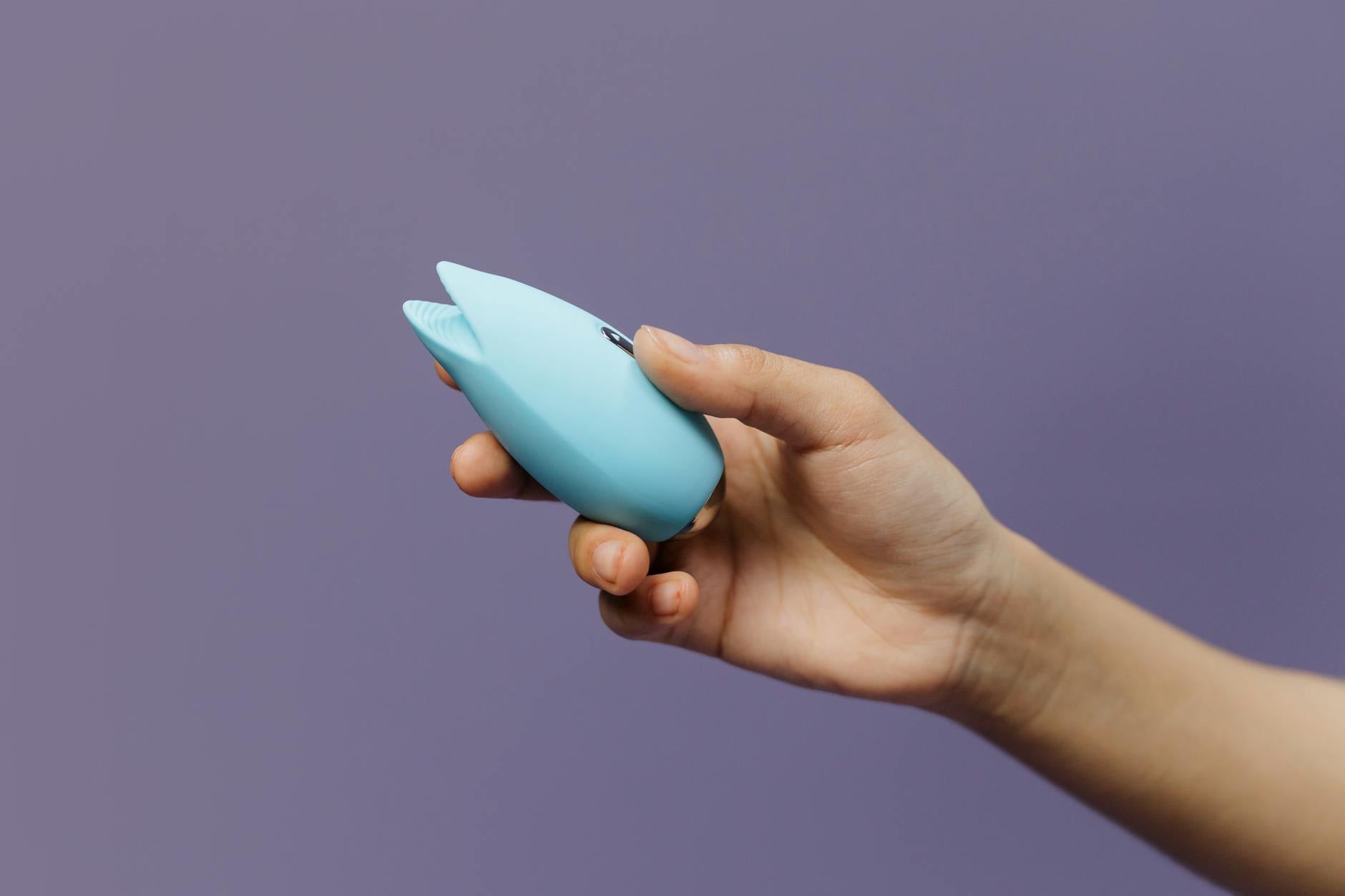
A lemon clitoral vibrator like the Lem works brilliantly for a specific kind of pleasure: focused, intense, responsive. It rewards an engaged nervous system. When your sex drive has genuinely lowered, your nervous system is often in a different state. You might feel present but not particularly aroused. Or aroused in concept but not in sensation.
This creates a gap. The vibrator is designed to deliver maximum sensation. Your body is designed to minimize input. Neither is wrong. They're just out of sync.
What complicates it further: many people with fluctuating desire assume that the fix is "trying harder" or "going back to what used to work." This almost always backfires. Pushing into pleasure when your nervous system is genuinely offline turns the vibrator into a reminder of what you're not feeling instead of an invitation to what you could feel.
The nervous system piece (why it matters more than you think)
Sex drive isn't just hormones. It's your nervous system's read on safety, availability, and capacity. When you're stressed, sleep-deprived, managing multiple relationships or caregiving demands, or processing grief or change, your parasympathetic nervous system (the one that says yes to pleasure) takes a backseat. Your sympathetic system (fight, flight, freeze) takes over.
A lemon vibrator works best when your parasympathetic nervous system is relatively calm and engaged. If it's in protective mode, the vibrator often feels like an external demand instead of a delight.
So the first move isn't to use your lemon vibrator differently. It's to honestly assess where your nervous system actually is. Are you tired? Stressed? Grieving something? Managing a lot interpersonally? If the answer is yes to any of those, your lowered desire isn't a malfunction. It's your body doing its job.
How to reconnect with lemon vibrators when desire is lower
Three principles matter here.
One: Stop treating pleasure like a performance obligation. If you're using your lemon clitoral vibrator because you think you should, or because your partner expects you to, or because you're trying to prove something to yourself, you're working against your own nervous system. The vibrator becomes a failure. You don't.
Instead, get curious. What does your body actually want right now? Sometimes that's nothing. Sometimes it's a very slow, low-intensity exploration. Sometimes it's just sensation without the goal of orgasm.
Two: Use pattern and intensity below where you'd normally go. Most lemon vibrators have multiple settings. If you usually live at pattern 4 or 5, start at pattern 1 or 2. Let your nervous system come to the vibration instead of the vibration coming to it. This takes longer. It's boring by design. And that's exactly the point when desire is already depleted.
Many of my clients discover that their most satisfying sessions happen not at peak intensity, but when they spend 20 minutes at the lowest setting, letting their body slowly wake up to sensation. No rush. No goal. Just gentle consistency.
Three: Time matters. A lot. When sex drive is already lower, morning sessions often fail because your body is still waking up. Evening sessions can backfire if you're already exhausted. Midday, after lunch but before the afternoon crash, often works better. And weekends, when there's genuinely no time pressure, shift everything.
I'm not saying you need to coordinate a perfect moment. I'm saying that if your desire is already fragile, fighting fatigue and time pressure at the same time is a setup.
When to use lemon vibrators and when to pause completely
There's a real difference between "my desire is lower right now" and "I'm experiencing depression, burnout, or significant relational strain."
If you're in the first camp, lighter lemon vibrator sessions, lower intensity, and no goal-orientation usually helps. You're gently inviting your nervous system back to pleasure without forcing it.
If you're in the second camp, taking a genuine pause often works better. Not forever. Just until the acute thing shifts. This might sound counterintuitive, but for many people, trying to maintain a pleasure practice during serious depression or relationship crisis often makes both worse. The practice becomes one more thing you're failing at.
I recommend asking yourself this: "If I didn't use this vibrator at all for two weeks, would I feel relieved or disappointed?" If the answer is relieved, pause. If the answer is disappointed, you're ready to ease back in.
How partners fit into this (or don't)
If you have a partner, the stakes around fluctuating desire often go up. Partners sometimes interpret lower sex drive as rejection. Or they make it about themselves. This turns a temporary nervous system shift into a relationship issue.
The clearest conversation I've found is the one that separates the two things. "My desire has shifted because of stress/sleep/life" is not the same as "I don't want you." And the first conversation should happen before any expectation about lemon vibrators or sex comes up.
Some partners respond well to lower-pressure sessions. Others need the framing that lemon vibrators right now are about your nervous system resetting, not about them or about maintaining a sexual frequency.
When fluctuation turns into something bigger
If your desire has stayed genuinely low for more than a few months, and the stress or life factors that might explain it have mostly resolved, it's worth a conversation with your doctor. Thyroid issues, vitamin deficiencies, medication side effects, and hormonal changes all show up as lower sex drive. How Lemon Vibrators Help With Medication Side Effects on Arousal covers some of these specifically.
Similarly, if your desire has dropped alongside increased anxiety or intrusive thoughts, or if it's tied to a specific relational hurt, talking to a therapist before trying to fix it with a vibrator usually saves time.
What to expect as you ease back in
When you start using your lemon vibrator again after a lower-desire season, expect it to feel different. Not worse necessarily. Just different. Your body has recalibrated. What once felt amazing might feel intense. What you used to do for 30 minutes might now feel best as 15.
This is normal. You're not broken. You're just returning to something after a pause.
Many of my clients report that when they finally do ease back into their pleasure practice, it feels fresher. Less routine. Less like something they do and more like something they want. And that shift in quality often matters more than returning to the same frequency.
The bigger picture
Honestly? The most useful thing you can do is let your lemon vibrator be flexible. Let it be a tool that adapts to you instead of demanding you adapt to it. Some seasons you use it multiple times a week. Some seasons you use it once a month. Some seasons you don't use it at all.
This is not failure. This is you being human. Your sex drive will probably fluctuate again. And again. Your job is to notice it without judgment, adjust accordingly, and trust that pleasure isn't going anywhere. It just moves at your actual pace, not the pace you think you're supposed to maintain.
People also ask
How long does it usually take for libido to come back after stress?
It depends entirely on how long the stressor was active and how much it depleted you. Acute stress (a project, a conflict, a family issue) often releases its grip on your nervous system within days or weeks once it's over. Your desire usually follows within 2 to 4 weeks as your body genuinely relaxes.
Chronic stress (ongoing caregiving, sustained workplace pressure, relationship tension) takes longer. Your nervous system needs time to genuinely believe the threat has passed. Many people find that it takes 6 to 12 weeks of actual relief (not just saying you're relaxed, but genuinely having fewer demands) for desire to noticeably return.
The mistake most people make is trying to force it sooner. Your nervous system doesn't respond to willpower. It responds to actual rest and safety.
Can using a lemon vibrator actually lower desire over time?
Not directly. But some people notice that if they use their lemon vibrator exclusively as a stress management tool, or if they use it when they're not actually aroused and are just trying to make their body cooperate, they start to associate it with performance pressure rather than pleasure. This can make genuine desire feel more distant.
The fix is the same as reconnecting with desire anywhere else: use the vibrator when you actually want to, at intensity that matches where you are, without goals. How Lemon Vibrators Help When You Are Desensitized to Pleasure explores this in depth.
Is lower sex drive a sign I need to change my relationship?
Not necessarily. Lower desire is a sign your nervous system is responding to something. That something could be the relationship, but it could also be sleep deprivation, work stress, medication changes, or just a life season. Before changing your relationship, figure out what's actually driving the shift.
One useful practice: does your desire pick up when the external stressor goes away? Or when you have time alone? Or on vacation? If yes, the relationship is probably not the primary issue. If your desire stays low even when external stress lifts, and especially if it's specifically around your partner, that might be worth exploring in therapy.
Should I tell my partner if I'm using my lemon vibrator differently or less often?
That depends on how much sex and pleasure are shared activities versus solo activities in your relationship. If you usually have sex together, and your vibrator use is a solo thing, your partner doesn't necessarily need a play-by-play update. They do need to know if your overall desire has shifted, because that affects both of you.
If you're using your lemon vibrator as part of partnered sex, then yes, more transparency helps. Something like "My nervous system is a bit fried right now, and I'm going slower with pleasure for a few weeks" gives them context. It prevents them from interpreting lower intensity or shorter sessions as rejection.
Can lower desire come back if I just use my vibrator more?
No, and this is actually the opposite of helpful. Using a lemon vibrator from obligation, or from a belief that "more practice will fix it," usually deadens desire further. Your body starts to associate pleasure with pressure.
If you want to rebuild desire, the path is: lower external demands, better sleep, addressing any relational friction, and then easing into pleasure when it genuinely returns. The vibrator can help that happen, but it can't force it.
What if I have low desire but my partner doesn't?
This is one of the most common relationship tensions I see. And there's no perfect answer. But here's what usually helps: separate the two desires without making either one wrong. Your lower desire is real. Your partner's higher desire is real. They're just not the same right now.
Trying to have the same desire level is like trying to have the same sleep needs. Doesn't work. What does work is some combination of: you stretching slightly on nights when you can, them respecting your genuine low points, and both of you getting some pleasure solo (where lemon vibrators come in handy for both of you independently). How to Use Lemon Vibrators With a New Partner covers some of this framework too.
Desire fluctuates. That's not a problem to solve. That's just sex being part of a human life. Your lemon vibrator works best when you let it flex alongside you, at the actual pace your body and nervous system can handle. Some seasons that's intense and frequent. Some seasons that's slow and sparse. All of it is normal.
If you want to talk through what's driving your specific shift in desire, or how to navigate lower libido in a relationship, reach out. That's what I'm here for.